
AI chatbots for clinics: appointments and reminders
AI chatbots for clinics book appointments, send reminders, answer questions and triage on WhatsApp — what they do, what they cost, and what to check.
By CINEM Team
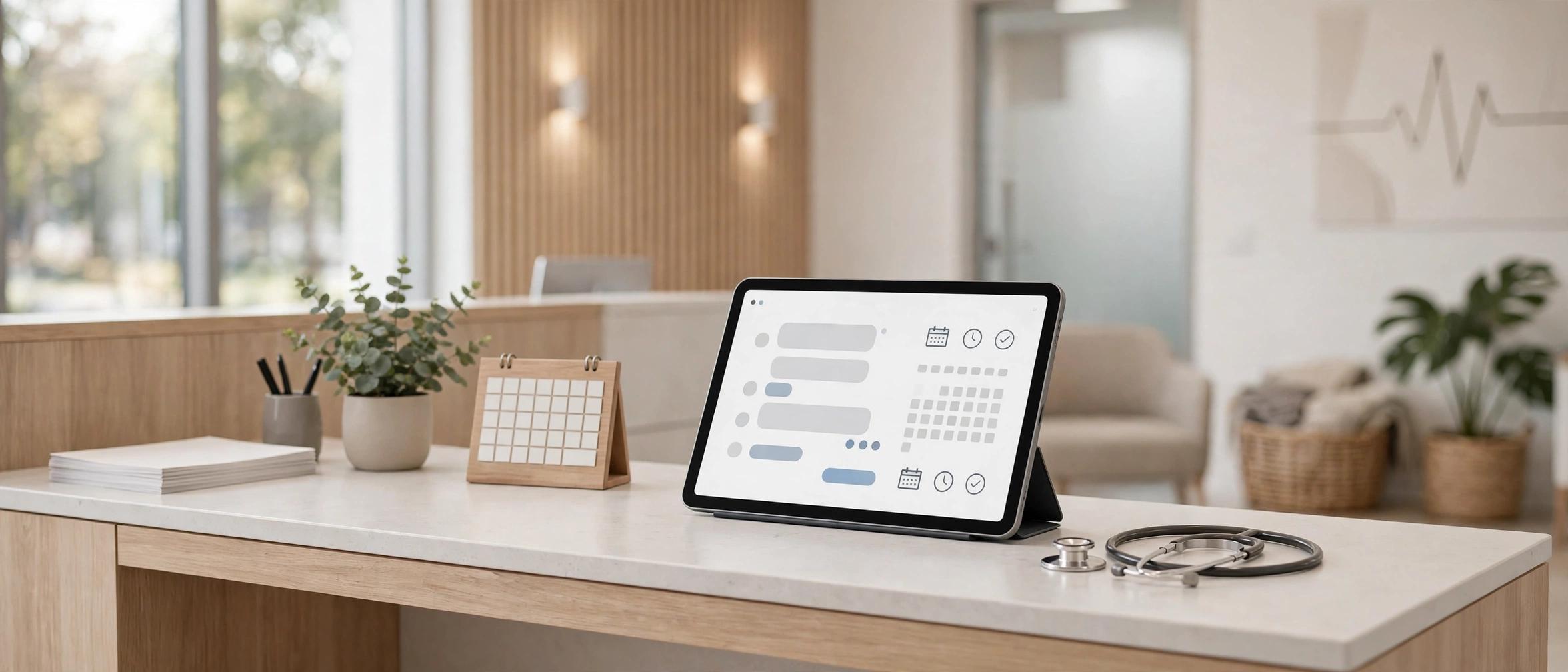
A clinic's phone rings all day, and most of the calls are the same. I need an appointment. What time is the doctor in. How much is a consultation. Where are you located. Can I move my appointment to tomorrow. Meanwhile the receptionist is trying to check in the patient standing in front of them, and the patient on the phone is waiting, and the patient who called twice and got no answer has already booked somewhere else. This is the problem an AI chatbot solves for clinics. It is not a replacement for a receptionist. It is a member of staff who answers the phone and the messages all night, books the appointments, sends the reminders, answers the routine questions, and hands the rest to a human, with the details attached. This guide explains what an AI chatbot does for a clinic, in plain terms: appointments, reminders, patient questions, and WhatsApp triage, and what it costs to have one working properly.
The short answer
An AI chatbot for clinics pays for itself by booking appointments around the clock, cutting no-shows with reminders, and answering the routine questions that keep the reception desk busy. A patient who messages at 10 at night can book a slot for tomorrow morning without waiting for the clinic to open, and a patient who gets a reminder the day before is far less likely to miss the appointment. At CINEM, an AI chatbot starts from $999 setup plus $299 per month, and it works on your website and on WhatsApp, books from your real appointment calendar, and hands the conversation to your team when a human is needed. It does not diagnose, it does not give medical advice, and it never replaces a doctor. The honest rule is simple: a chatbot is worth it when the appointments it books and the no-shows it prevents are worth more than $299 a month, which for most clinics is true within the first few weeks. If you want the wider picture on what a clinic website costs to build, our related post Clinic website cost: appointments, doctors and patient trust covers the website itself, and our related post AI chatbots for ecommerce: carts, support and repeat orders shows the same technology working for online stores.
Appointments without the phone queue
The biggest job of a clinic chatbot is also the most valuable: taking bookings without the phone queue. A patient who wants an appointment does not want to call, wait, explain, and be put on hold. They want to pick a time and know it is booked. A chatbot lets them do that, at any hour, on WhatsApp or on the clinic website. It asks which doctor or service they need, shows the available times from the real calendar, and confirms the booking, with the doctor, the time, and the location, in a message the patient can keep. It can also take the details the clinic needs: a name, a phone number, and the reason for the visit, in plain words, so the receptionist sees a complete booking, not a half-finished message. And when the patient needs to move or cancel, the chatbot handles that too, and frees the slot for someone else, instead of the slot sitting empty because nobody answered the phone. The result is more bookings, because patients who can book at midnight do book at midnight, and fewer lost patients, because a patient who gets no answer twice usually books somewhere else. The receptionist, meanwhile, is free to look after the patients who are actually in the clinic, instead of answering the same booking call all day. A clinic that books appointments around the clock is a clinic that fills its calendar.
Reminders that cut no-shows
The second job of a clinic chatbot is the one that saves the most money: reminders that stop patients missing their appointments. A missed appointment costs a clinic twice. The slot sits empty, and the doctor's time is wasted, and the patient who missed it still needs to be seen, which means another slot later. Most no-shows are not deliberate. The patient forgot, or they wrote the time down wrong, or they meant to come and something came up. A reminder the day before, and a second one a few hours before, on WhatsApp, where the patient actually reads messages, prevents most of them. The chatbot sends the reminder, with the doctor, the time, and the location, and asks the patient to confirm, or to move the appointment if they cannot come. A patient who confirms is a patient who comes. A patient who says they cannot come frees the slot, and the chatbot can offer it to the next patient on the waiting list, instead of the slot sitting empty. The effect is not small. Clinics that send reminders see a real drop in no-shows, and a real rise in the number of patients seen each day, without adding a single doctor. It is the cheapest capacity a clinic can buy, because it uses the appointments that already exist, instead of losing them to a forgotten time.
Patient questions, answered safely
The third job of a clinic chatbot is answering the questions that patients ask before they book, and the questions they ask after. What time is the doctor in. How much is a consultation. Do you take walk-ins. Where are you located. What should I bring. Do you have a female doctor. These are the questions that fill the phone lines, and they all have the same answers, which means a chatbot can answer them instantly, at any hour, from the information the clinic has given it. The boundary matters, and an honest guide should state it clearly. A chatbot answers administrative questions: times, prices, locations, services, and how to book. It does not diagnose, it does not give medical advice, and it does not tell a patient what treatment they need. When a patient describes symptoms, or asks a medical question, the chatbot should say so honestly, and offer a human, or an appointment with a doctor, rather than guessing. That boundary is what makes a clinic chatbot safe, and it is what patients trust. A chatbot that pretends to be a doctor is a risk. A chatbot that knows what it is, a helpful receptionist that works all night, is an asset. Before you buy one, ask how it handles a medical question, and what it says when it does not know the answer. The answer should be that it hands over to a human, with the conversation attached, and never guesses.
WhatsApp triage and the human handover
The fourth job of a clinic chatbot is the one that holds the whole system together: triage on WhatsApp, and a clean handover to a human. Most patients, in Pakistan, the UAE, India, and much of the world, prefer to message on WhatsApp rather than call or fill in a form. A chatbot on WhatsApp meets them where they are, and sorts the messages into the ones it can handle and the ones it cannot. A booking, a reminder, a price question, or a direction: the chatbot handles it. An urgent problem, a complaint, a complicated case, or a patient who is distressed: the chatbot hands it to a human, immediately, with the conversation so far and the patient's details attached, so your team does not have to ask the patient to repeat everything. The handover is the part that separates a good chatbot from a bad one. A bad chatbot traps the patient in a loop, repeating the same question, and the patient gives up. A good chatbot knows its limits, says so, and gets a human involved quickly. It should also be clear about privacy. Patient details are sensitive, and the chatbot should only ask for what the clinic needs to book or help, and the clinic should know where that information goes. If your patients mostly call rather than message, an AI calling agent from $1,499 setup plus $399 per month can answer those calls and book appointments when your team is busy. The channel matters less than the speed. A patient who gets an answer in minutes is a patient who stays with you.
What it costs and what to check
A clinic chatbot is a small investment next to the appointments it books and the no-shows it prevents, but only if it is built properly, so it is worth knowing what to check. At CINEM, an AI chatbot starts from $999 setup plus $299 per month. The setup is the work that makes the difference: connecting the chatbot to your real appointment calendar, your doctors and services, your prices, and your policies, so its answers are accurate and specific to your clinic, not generic. A chatbot that books a patient into a slot that does not exist, or that quotes the wrong price, creates a problem your team has to fix in front of a patient. The monthly cost covers the running, the updates, and the improvements: new doctors, new timings, new services, and the conversations that show where patients are getting stuck. Before you buy one, ask what it connects to, how it handles a medical question, how quickly a human can take over, and what happens to patient information. The answer to the first question should name your calendar, your doctors, and your prices. The answer to the second should be that it hands over to a human, never guesses, and never diagnoses. The answer to the third should be immediately, with the conversation attached. And the answer to the fourth should be clear and specific, because patient trust is the clinic's most valuable asset. A chatbot that earns that trust is worth every rupee. One that does not is not worth having.
Frequently asked questions
Can an AI chatbot book appointments for my clinic?
Yes, if it is connected to your real appointment calendar. It shows the available times, takes the patient's details, and confirms the booking with the doctor, the time and the location. It can also move or cancel a booking, and free the slot for someone else.
Do chatbot reminders really cut no-shows?
Yes. Most no-shows happen because the patient forgot or wrote the time down wrong. A reminder on WhatsApp the day before, and a second one a few hours before, prevents most of them, and a patient who says they cannot come frees the slot for the next patient on the waiting list.
Will the chatbot give medical advice?
No, and it should not. A clinic chatbot answers administrative questions: times, prices, locations, services, and how to book. When a patient describes symptoms or asks a medical question, it hands over to a human or offers an appointment with a doctor, rather than guessing.
What does an AI chatbot for clinics cost?
At CINEM, an AI chatbot starts from $999 setup plus $299 per month. The setup connects it to your appointment calendar, doctors, services and prices. The monthly cost covers running, updates and improvements. For most clinics, the appointments it books and the no-shows it prevents cover the cost within the first few weeks.
What happens when a patient needs a human?
The chatbot hands the conversation to your team immediately, with everything the patient has said and their details attached, so they do not have to repeat themselves. Urgent problems, complaints and complicated cases should always go to a human, quickly.
If you run a clinic and your phone never stops, your appointments are missed, or your patients cannot book after hours, it is worth an honest conversation before you spend anything. Tell CINEM at hello@cinem.tech how many doctors you have, how patients book today, and where they message you. We will show you what a chatbot would do for your clinic, from a focused setup at $999 plus $299 a month, and price it honestly, with the running costs included.